What is LM-Kit.NET?
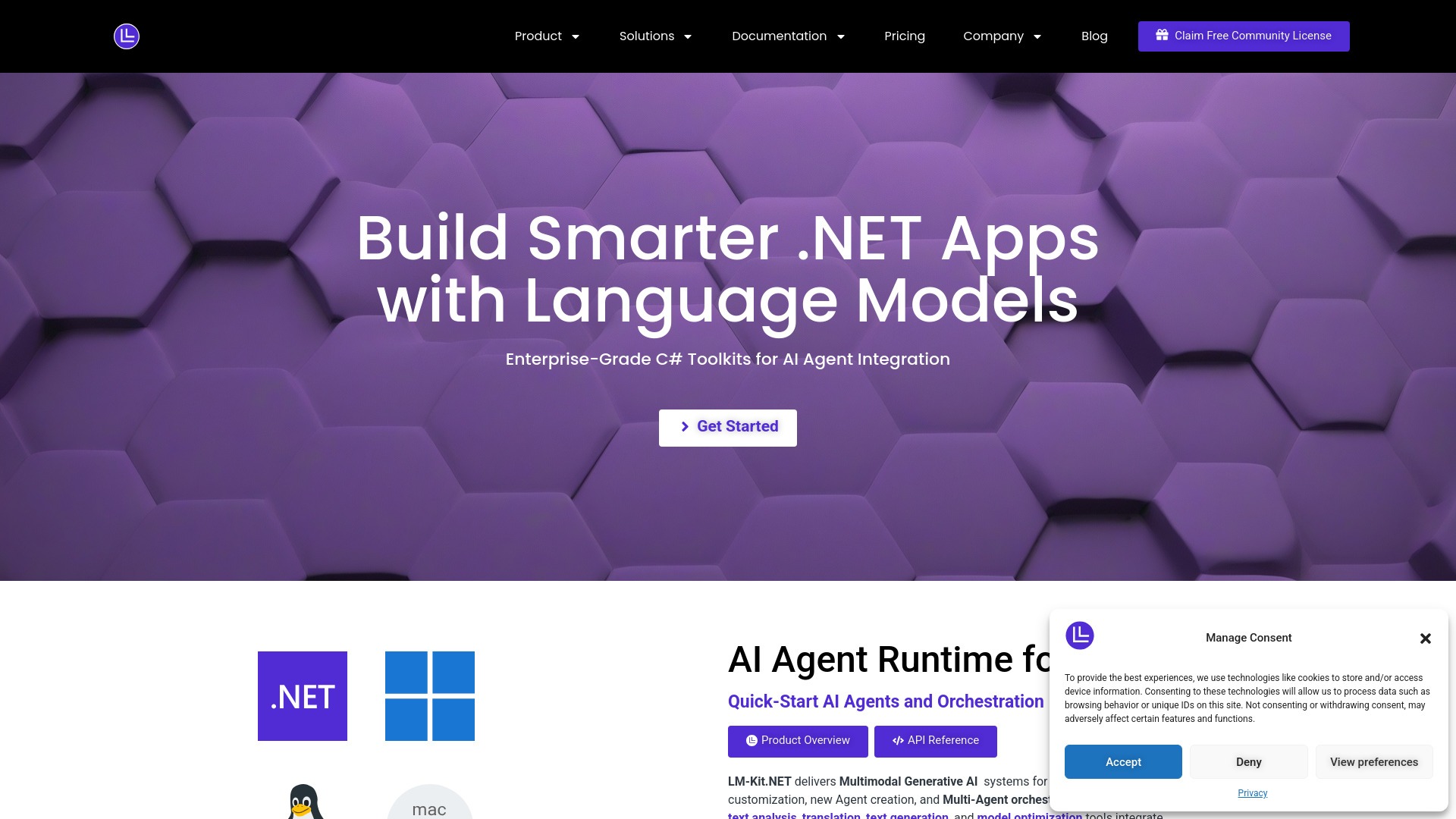
LM-Kit.NET is a cutting-edge .NET SDK designed for seamless integration of Generative AI capabilities into C# and VB.NET applications. This comprehensive development toolkit empowers developers to harness the full potential of Large Language Models (LLMs) with unprecedented ease. It provides a robust framework for implementing AI-driven content generation, natural language processing, and predictive analytics within existing .NET ecosystems. Whether building sophisticated chatbots, creating personalized user experiences, or automating complex data analysis, LM-Kit.NET serves as the essential bridge between traditional software development and advanced AI capabilities.
How to use LM-Kit.NET?
Using LM-Kit.NET involves a straightforward integration process. First, install the SDK via NuGet package manager in your Visual Studio project. Next, initialize the SDK by configuring your API credentials and selecting the appropriate LLM model for your specific use case. Then, implement the SDK's intuitive API calls within your application code to generate text, analyze natural language, or perform predictive tasks. The SDK includes comprehensive documentation, code samples, and tutorials to guide developers through the implementation process. Finally, test and deploy your AI-enhanced application with confidence, leveraging the SDK's optimized performance and scalability features.
Core features of LM-Kit.NET?
- Advanced LLM Integration: Seamlessly incorporate state-of-the-art Large Language Models into your .NET applications for sophisticated text generation and natural language understanding.
- Multi-Model Support: Access a diverse library of pre-trained models or implement custom-trained models tailored to your specific business requirements and data patterns.
- Real-time Processing: Execute AI computations with low-latency responses, enabling interactive applications and real-time data analysis without performance bottlenecks.
- Comprehensive NLP Toolkit: Utilize built-in natural language processing capabilities including sentiment analysis, entity recognition, and language translation.
- Scalable Architecture: Design applications that can handle varying workloads and data volumes while maintaining optimal performance and resource efficiency.